
Machine Learning vs. Large Language Models

Ravichandran Harini, Jadetimes Staff
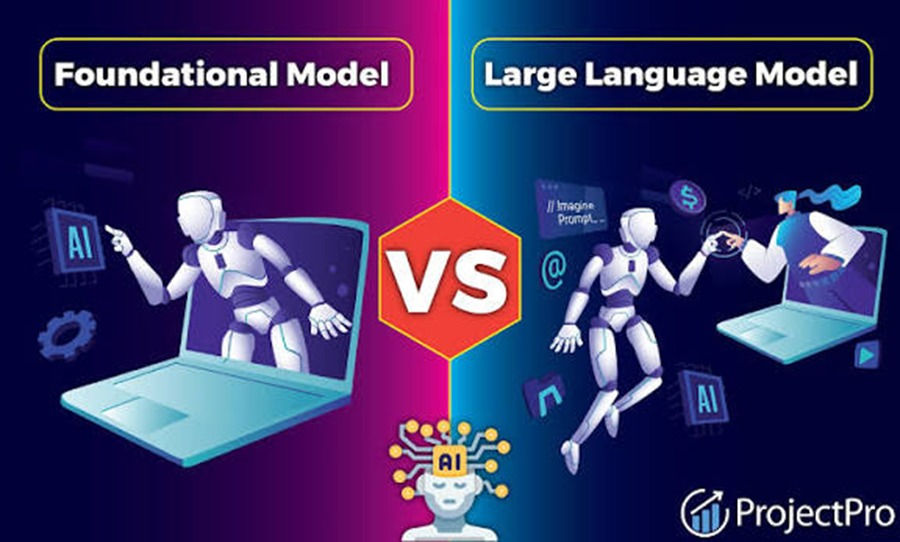
Why They're Not the Same Thing and Why It Matters
A student finishes an assignment with ChatGPT's help and pauses before submitting it: is this "artificial intelligence," or "machine learning," or something else entirely? The terms get used as if they mean the same thing. They don't, and the difference matters more than most people realize.
Part of the confusion is understandable. ChatGPT, Gemini, Claude, and Microsoft Copilot have become the public face of AI, so "AI," "machine learning," and "LLM" now get used interchangeably in everyday conversation, even though each describes something distinct.
Machine Learning is a branch of artificial intelligence that lets computers find patterns in data and make predictions or decisions without being explicitly programmed for every scenario. It powers Netflix's recommendation engine, credit card fraud detection, weather forecasting, medical diagnosis, and the perception systems in autonomous vehicles, applications spanning numbers, images, sound, and structured data.
Large Language Models are a specialized branch of deep learning, itself a subset of machine learning, trained specifically on enormous collections of text. Their breakthrough came from the Transformer architecture, introduced by Google researchers in 2017, which lets a model weigh the relationships between words across long passages rather than processing text word by word. That innovation is what allows LLMs to understand, generate, summarize, translate, and reason about human language with striking fluency.
Think of it this way: if artificial intelligence is a city, machine learning is a university within it, and large language models are one department inside that university, a highly influential department, but not the whole institution.
The two differ in what they're built for. Machine learning models are often narrow specialists trained for one task on one type of data. LLMs are generalists trained on vast, varied text, capable of shifting between writing, coding, and analysis, though prone to their own weakness: confidently generating false information, known as hallucination.
Both are reshaping work and raising real concerns simultaneously. They improve productivity, personalize education, and accelerate scientific research, while raising legitimate questions about bias, privacy, misinformation, and the energy costs of training ever-larger models. Stanford's 2025 AI Index found business adoption of AI reached 78 percent of organizations in 2024, up sharply from 55 percent the year before, alongside record corporate investment exceeding $252 billion.
Understanding this distinction matters because it moves the conversation past marketing buzzwords. The next generation of AI systems will likely blend machine learning, language models, computer vision, and robotics into single systems capable of tackling far more complex, real-world problems.


Comments