
Beneath the Waves: The Cables That Carry Our World

Ravichandran Harini, Jadetimes Staff
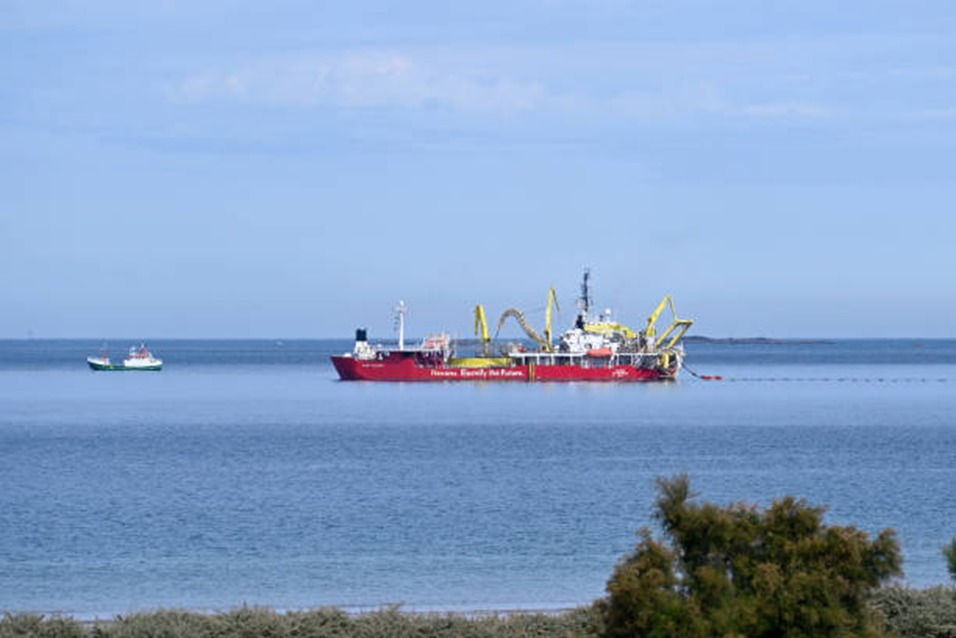
How does a message typed in Colombo appear on a screen in New York less than a second later? Most people imagine satellites beaming signals through space. The real answer lies somewhere far less glamorous, and far more astonishing: at the bottom of the ocean.
Submarine fibre-optic cables are thin strands of glass, often no thicker than a garden hose, laid across ocean floors and stretching between continents. Inside, pulses of light travel at extraordinary speed, carrying everything from emails and bank transfers to Netflix streams and video calls. Together, this hidden web of cable now spans hundreds of thousands of miles, and it is estimated to carry roughly 95 percent of all international internet and data traffic, according to industry researchers and organisations such as TeleGeography.
It is a common myth that satellites shoulder this burden. In reality, satellites handle only a small fraction of global data, mainly in remote regions without cable access. Undersea cables outperform satellites because light travels faster through glass fibre than data can bounce to orbit and back, and because a single cable can carry vastly more information at once. This invisible infrastructure underpins cloud computing, online education, international business, and the banking systems that move trillions of dollars daily.
Yet this network is more fragile than most realise. Cables are vulnerable to earthquakes, fishing trawlers, and ship anchors dragged carelessly across the seabed. In recent years, incidents in the Baltic Sea have drawn global attention, with several cables damaged between late 2024 and early 2025 amid suspicions of deliberate anchor-dragging by vessels linked to geopolitical tensions. Research group Insikt Group documented dozens of publicly reported cable damage incidents across 2024 and 2025 alone, noting that anchor dragging and natural causes remain the leading culprits, while repairs, requiring specialised ships and skilled technicians, can take weeks to complete.
Given the stakes, governments and technology giants such as Google, Meta, and Microsoft now invest billions of dollars annually to lay new routes, diversify paths, and fund rapid-repair capabilities, recognising that a handful of cable cuts can disrupt entire economies and communication networks.
This is the paradox of submarine cables: a system both remarkably resilient, built with redundancy and constant maintenance, and quietly vulnerable to accident and sabotage alike.
The next time a message crosses an ocean in an instant, remember that it likely travelled not through the sky, but along glass threads resting silently on the seabed, one of humanity's greatest engineering achievements, unseen yet indispensable, keeping billions of people connected every day.




Comments