
Caught in the Crossfire: How the Jensen Huang Scandal Became a Geopolitical Headache for Singapore

Vithanage Erandi Kawshalya Madhushani, Jadetimes Staff
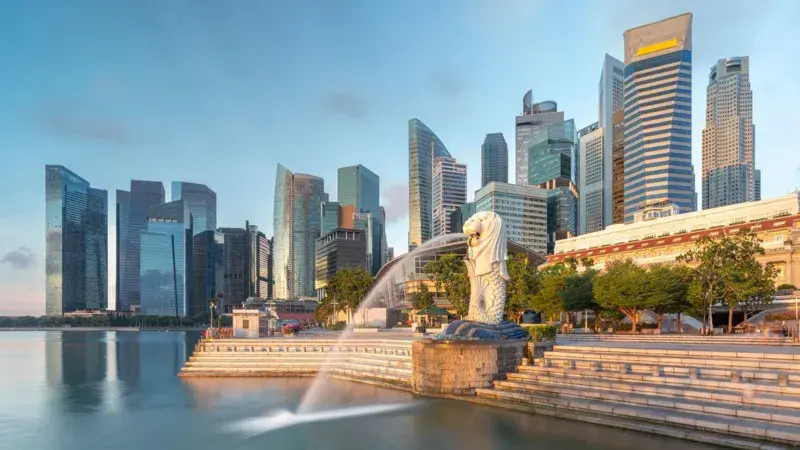
The sudden resignation of Nvidia chief executive Jensen Huang triggered by revelations of an extramarital affair with an executive suspected by U.S. intelligence of being a Chinese spy has sent shockwaves far beyond Silicon Valley. At the center of the diplomatic and economic fallout sits Singapore, a city state whose prosperity depends on being a friction free, strictly neutral hub for global finance, trade, and artificial intelligence infrastructure.
The Megaspeed Connection
The controversy revolves around Megaspeed International, a Singapore-registered cloud computing firm that spun out of Chinese video game giant 7Road Holdings in 2023. Shortly after being acquired by a Singaporean shell company, Megaspeed was designated an Nvidia Cloud Partner granting it preferential access to hundreds of shipments of advanced AI semiconductors despite tightening U.S. export restrictions on China.
Its former director, Chinese national Alice Huang (no relation to Jensen), became the focal point of both the personal scandal with Nvidia's CEO and an intense U.S. national security probe. American regulators scrutinized whether Megaspeed was acting as a conduit to illicitly divert restricted AI chips—or rent out high-end computing power to major Chinese tech firms. While Megaspeed has firmly denied any illegal activity and pledged full cooperation with U.S. authorities, the scandal thrust Singapore's role in the global semiconductor supply chain under an uncomfortable spotlight.
Walking a Geopolitical Tightrope
For decades, Singapore has thrived by pairing low barriers to business incorporation with steadfast neutrality between Washington and Beijing. The Jensen Huang fallout has directly tested that delicate balance, creating three major complications for the city state:
The Enforcement Dilemma: Singapore's Ministry of Home Affairs (MHA) has repeatedly emphasized that it does not enforce unilateral export controls imposed by foreign jurisdictions, though it maintains a zero-tolerance stance against fraud and false declarations under domestic law. By investigating Megaspeed strictly for domestic corporate offenses rather than acting as an automatic enforcer of U.S. sanctions, Singapore faces a no-win perception battle: risking dissatisfaction in Washington if it appears too hands-off, or inviting backlash from Beijing if it appears to bow to American pressure.
Diplomatic Friction Over Intelligence: As details of Singapore's parallel inquiry emerged, authorities revealed they had impounded Alice Huang's passport in June 2025 over potential false declarations before returning it in February 2026 due to insufficient evidence of local offenses, subsequently barring her from re-entering the country. Crucially, reports indicated that Singapore received minimal assistance from U.S. counterparts during its investigation, sparking quiet diplomatic friction over intelligence sharing and accountability.
A Threat to the Regional Data Center Boom: Because of strict land and energy constraints at home, Singapore-based entities have fueled a massive expansion of AI data centers just across the border in Malaysia's Johor state. The scandal has galvanized bipartisan momentum in the U.S. Congress to close "remote access" loopholes that allow Chinese entities to rent computing power from chips physically located in Southeast Asia. Coupled with Malaysia launching its own probe into a Megaspeed subsidiary, heightened regulatory uncertainty threatens billions of dollars in regional tech financing.
Protecting a Reputation Built on Trust
Singaporean officials have moved decisively to ring fence the country's standing as a clean, rules-based commercial center. Authorities noted that six other individuals linked to Megaspeed remain wanted for questioning none of whom have been in Singapore since the investigation began in February 2025 and pointed to separate domestic prosecutions against individuals accused of committing fraud involving server suppliers.
Yet the episode underscores a structural vulnerability that no amount of regulatory reassurance can easily erase. In an era where advanced microchips are treated as strategic weapons rather than ordinary commodities, Singapore's greatest competitive advantage its openness, speed, and ease of doing business makes it an inevitable flashpoint whenever U.S. China tech rivalries boil over.


Comments