
The Vanishing Nations: Can a Country Disappear Beneath the Sea?

Ravichandran Harini, Jadetimes Staff
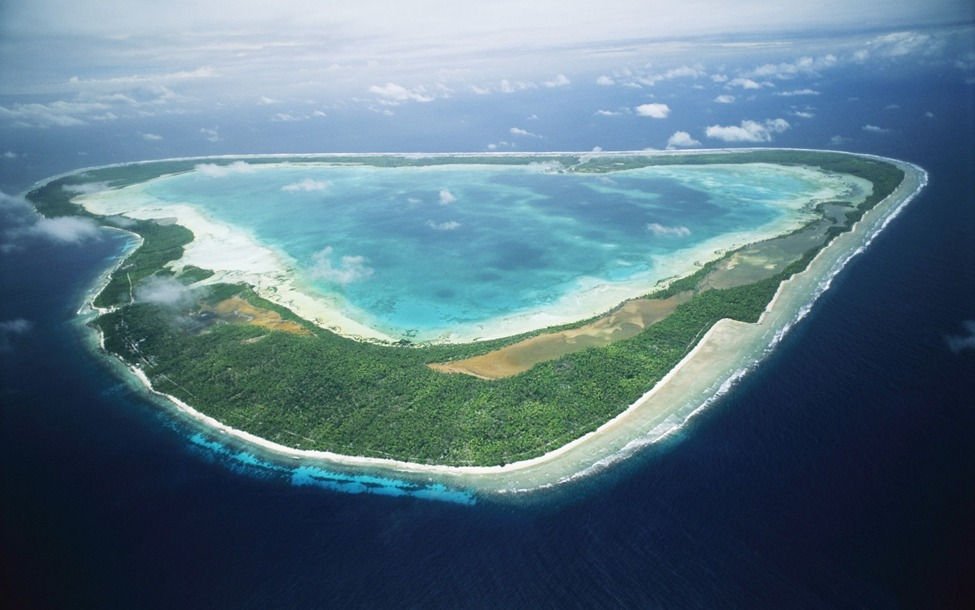
Imagine waking up one morning to news that your country may not exist by the time your grandchildren are old. Not conquered, not renamed, simply gone, swallowed by the ocean that once lapped gently at its shores. For a handful of nations, this is not a thought experiment. It is a slow-moving emergency written into the tide charts.
The culprit is climate change, and the mechanics are deceptively simple. As greenhouse gases trap more heat, glaciers and polar ice sheets in Greenland and Antarctica melt and pour fresh water into the oceans. At the same time, warmer seawater physically expands, a process scientists call thermal expansion. According to NASA's satellite record, global mean sea level has risen more than 100 millimeters since 1993, with roughly two thirds of that rise coming from melting ice and one third from ocean warming. More troubling still, the rate of rise has roughly doubled over the past three decades, climbing from about 2.1 millimeters a year in 1993 to around 4.5 millimeters a year today.
For low lying island nations, these millimeters translate into existential risk. The Maldives, Tuvalu, and Kiribati sit only a meter or two above sea level on average. Rising seas contaminate freshwater aquifers with salt, erode coastlines, and turn king tide floods into routine events. Tourism revenue, agriculture, and basic infrastructure all suffer, while entire communities face the prospect of climate driven displacement, becoming, in effect, refugees without a war.
Yet the story is not one of pure despair. International efforts are accelerating, from the Paris Agreement's push to limit warming, to investment in renewable energy and coastal defences such as seawalls, mangrove restoration, and artificial land reclamation. Tuvalu has even begun digitally archiving its territory and culture, while some nations explore floating infrastructure as an adaptation strategy rather than surrender.
The truth lies between alarm and resilience. Science warns clearly that without deep cuts to emissions, some island nations may become uninhabitable within this century. But adaptation, diplomacy, and innovation are buying time and dignity for the people who call these fragile places home.
Protecting these nations is not a regional issue but a test of global solidarity. The waters rising around Tuvalu today may be lapping at larger coastlines tomorrow. Urgent, coordinated climate action is no longer optional; it is the price of keeping whole nations on the map.



Comments