
Trump Defends Ohio Data Centers as AI Infrastructure Becomes Key U.S. Election Issue

Nivedita Chakrapani, Jadetimes staff
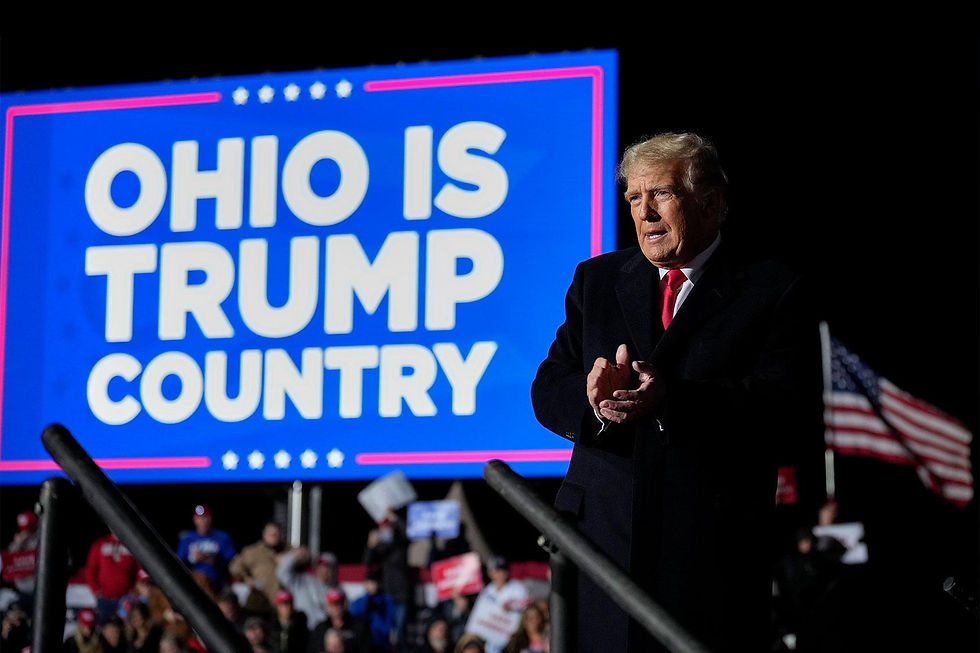
President Donald Trump defended the expansion of artificial intelligence data centers in Ohio during a campaign rally Saturday, arguing that the large facilities could bring significant economic benefits while warning that blocking them could push investment toward China.
The debate over data centers has become increasingly political across the United States. Although the facilities support the rapidly expanding AI industry, communities have raised concerns about electricity costs, water consumption, farmland and the environmental impact of large-scale developments.
AI Investment Meets Local Concerns
Data centers have become essential infrastructure for companies developing advanced artificial intelligence systems. Their enormous computing requirements mean that new facilities can consume substantial amounts of electricity and require significant infrastructure investment.
Trump argued that the United States cannot afford to slow the construction of these facilities while competing with China for leadership in artificial intelligence. His comments came as he campaigned in Ohio ahead of the November 3 midterm elections.
Ohio Becomes a Political Battleground
Ohio has emerged as an important test case for the national data-center debate. Republican Sen. Jon Husted has promoted the state's efforts to attract technology investment, while Democratic opponents have criticized incentives provided to large technology companies.
The issue is particularly sensitive because Ohio is also home to a competitive Senate race. Husted is seeking to retain the seat, while former Democratic Sen. Sherrod Brown is attempting to return to the Senate.
Electricity Costs Under the Spotlight
One of the biggest concerns surrounding AI data centers is who ultimately pays for the electricity and infrastructure required to operate them.
Supporters say data centers can generate investment, construction activity and economic growth. Critics argue that households could face higher utility costs if infrastructure expenses are shifted to ordinary electricity customers.
The U.S. Senate recently considered legislation addressing how large power users should contribute toward electricity costs, although the measure did not advance after opposition from Democrats.
A Bigger Question for America's AI Future
The controversy illustrates a broader challenge facing the United States: how to expand AI infrastructure rapidly while protecting consumers and local communities.
Technology companies are racing to build computing capacity as demand for AI services increases. Policymakers therefore face pressure to balance economic growth and technological competition with questions about energy, water, land use and affordability.
With the midterm elections approaching, data-center development could become an increasingly important issue for voters in states seeking to attract major technology investments.


Comments