
Mongolia’s Quiet Power Play: Why Ulaanbaatar Joined Trump’s Board of Peace
- Rahmani Khoshnaw

- Feb 12
- 5 min read
Khoshnaw Rahmani, Jadetimes Staff
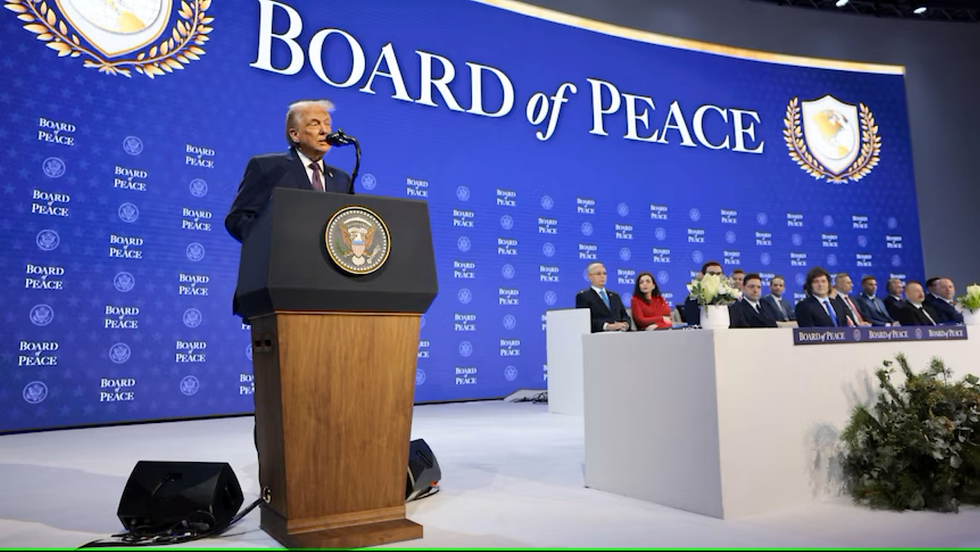
Mongolia’s decision to join the Board of Peace is a deliberate, low visibility exercise in strategic hedging. Announced as part of a U.S. led initiative framed around conflict mediation and postwar stabilisation, the Board offers Ulaanbaatar a direct channel to Washington at a moment when the country’s “third neighbour” doctrine is being tested by intensifying great power competition. This article presents the news, traces the full history of Mongolia’s balancing strategy, explains what joining the Board of Peace means in practice, compares the move to similar small state alignments, and maps the political, economic, and security implications for Mongolia and its neighbours.
The news in brief
Mongolia has accepted an invitation to join the Board of Peace, a U.S. initiative announced by President Donald Trump that positions the United States as a convenor of multilateral stabilisation and reconstruction efforts, with Gaza identified as an initial priority. Ulaanbaatar has not publicly disclosed the financial terms or operational commitments attached to membership. Mongolian officials and analysts describe the decision as pragmatic: a way to secure high level access to Washington, attract investment, and expand diplomatic options without abandoning ties to Russia and China.
1. The third neighbour doctrine: origins and evolution
Definition and origin. The “third neighbour” concept—Mongolia’s core foreign policy doctrine—refers to cultivating relationships with states beyond its immediate neighbours, Russia and China, to preserve autonomy and diversify economic and security partnerships. The term entered Mongolia’s diplomatic lexicon after U.S. Secretary of State James Baker used the phrase during a 1990 visit, and it has since been institutionalised in Ulaanbaatar’s strategic planning.
Early implementation (1990s–2000s). After democratization in 1990, Mongolia pursued broad engagement with Western democracies, Japan, South Korea, and others to attract investment and technical assistance. The policy combined symbolic gestures—public alignment with Western positions at key moments—with practical cooperation in development and security. Academic reviews trace a pattern of opportunistic engagement: Mongolia joined multilateral initiatives and bilateral partnerships that offered concrete benefits while avoiding formal alliances that might antagonise Moscow or Beijing.
Institutionalisation and policy patterns (2010s–2020s). Over three decades the third neighbour strategy matured into a pragmatic toolkit: hosting foreign missions, participating in UN peacekeeping, negotiating development compacts, and courting diversified trade partners. Recent analyses characterise the policy as adaptive rather than ideological—Ulaanbaatar seeks as many external partners as possible to reduce vulnerability to coercion and to leverage competition among larger powers for domestic gains.
2. Why the Board of Peace matters to Mongolia
Access and symbolism. For a small state, formal inclusion in a U.S. led executive forum confers diplomatic visibility and a symbolic endorsement that can be converted into tangible benefits: meetings with senior U.S. officials, prioritised development assistance, and political cover for policy choices that might otherwise provoke regional pushback.
Economic and development leverage. Mongolia’s economy is heavily resource dependent and constrained by infrastructure bottlenecks. Participation in the Board creates a plausible pathway to accelerate investment in mining, transport, and energy projects and to revive or extend U.S. development instruments that have previously delivered measurable results in Mongolia.
Peacekeeping and in kind contributions. Mongolia has a strong UN peacekeeping record and could offer trained contingents as in kind contributions to Board missions. This option allows Ulaanbaatar to demonstrate commitment without large cash outlays and to preserve its international profile as a contributor to global security.
Political calculus at home. High level access to Washington can be politically valuable domestically. Leaders in Ulaanbaatar can present Board membership as a diplomatic achievement that strengthens national security and economic prospects—useful currency in domestic politics.
3. What joining the Board of Peace likely entails
Membership tradeoffs. Public statements indicate the Board is designed as a multilateral stabilisation forum; however, the initiative’s structure, budgetary commitments, and operational rules remain opaque. For Mongolia, the likely bargain is access and influence in exchange for diplomatic support, limited operational contributions (peacekeepers, training), and political alignment on specific initiatives.
Operational scenarios. Mongolia could contribute in three main ways:
· Personnel: Deploy peacekeepers or civilian stabilisation teams to Board sponsored missions.
· Diplomacy: Use its seat to shape mission mandates and to advocate for development priorities that benefit Mongolia’s interests.
· Economic cooperation: Negotiate bilateral or multilateral projects tied to Board activities—transport corridors, mineral development partnerships, or technical assistance.
Risk management. Ulaanbaatar will seek to keep commitments modular and reversible to avoid entanglement in contested theatres or sanctions regimes. The country’s historical pattern is to join initiatives that are loosely defined and operationally limited, minimising the risk of direct confrontation with neighbours.
4. Historical precedents and comparable cases
Mongolia’s past alignments. Mongolia has repeatedly used international initiatives to secure strategic benefits: joining the U.S. led coalition in Iraq (2003) and participating in UN peacekeeping missions are examples of leveraging limited contributions for political capital and development assistance. These precedents show a consistent pattern of transactional engagement rather than ideological alignment.
Small state strategies elsewhere. Comparable cases include:
· Georgia and NATO related partnerships: Tbilisi pursued partnership programs to secure Western support while managing relations with Russia.
· Jordan and multilateral stabilisation roles: Jordan leverages its strategic location and security contributions to secure aid and diplomatic backing.
· South Korea’s balancing during Cold War transitions: Seoul cultivated ties with multiple powers to maximise security guarantees and economic opportunities.
These analogues illustrate a common small state logic: use selective cooperation with major powers to expand strategic options while avoiding full alignment that would provoke retaliation.
5. Risks, constraints, and regional reactions
Moscow and Beijing. Both neighbours watch Mongolia’s external engagements closely. Historically, Ulaanbaatar has calibrated its actions to avoid overt provocation. Moscow’s and Beijing’s responses to Board membership are likely to be measured—diplomatic protests, public statements, or increased bilateral engagement to counterbalance U.S. influence—rather than immediate coercive measures, but the risk of economic or political pressure cannot be discounted.
Legal and reputational dilemmas. Mongolia’s balancing act has produced awkward moments—most notably when it hosted high level visits from leaders subject to international controversy while remaining a party to international legal regimes. These tensions highlight the limits of symbolic neutrality when legal obligations and geopolitical realities collide.
Domestic political dynamics. Public opinion in Mongolia is mixed: many citizens value diversified ties and development opportunities, while nationalist and pro neighbour constituencies warn against alienating Russia or China. Political leaders must manage these domestic cleavages while extracting benefits from Board membership.
6. Timeline: Mongolia’s third neighbour trajectory and the Board decision
· 1990: U.S. Secretary of State James Baker uses the phrase “third neighbour,” catalysing Mongolia’s policy to cultivate partners beyond Russia and China.
· 1990s: Mongolia pursues democratic reforms and opens diplomatic relations with Western states and Japan; early development partnerships begin.
· 2003: Mongolia contributes troops to the U.S. led coalition in Iraq, signalling willingness to partner with Washington on security missions.
· 2010s–2020s: The third neighbour strategy becomes institutionalised; Mongolia expands peacekeeping roles and development partnerships while managing economic dependence on China.
· 2025–2026: Mongolia accepts an invitation to join the Board of Peace, seeking diplomatic access, development leverage, and new deployment opportunities for its peacekeepers.
7. Policy implications and scenarios
Short term (0–18 months). Mongolia will use Board membership to secure meetings, development pledges, and potential investment commitments. Expect announcements of feasibility studies, memoranda of understanding, and targeted technical assistance.
Medium term (18–36 months). If Board engagement yields concrete projects—transport links, mining partnerships, or extended development compacts—Ulaanbaatar will have strengthened its bargaining position with neighbours and investors. Conversely, if the Board remains symbolic, Mongolia risks domestic criticism for limited returns.
Long term (3–7 years). Successful diversification could reduce Mongolia’s economic vulnerability and increase diplomatic autonomy. Failure or regional backlash could push Ulaanbaatar back toward accommodation with Moscow and Beijing.
8. A pragmatic, low risk strategy with outsized symbolic value
Mongolia’s entry into the Board of Peace is best read as a continuation of a long standing, pragmatic foreign policy approach: cultivate as many external partners as possible, extract development and security benefits, and preserve autonomy between two dominant neighbours. The Board offers Ulaanbaatar a high visibility channel to Washington, potential development leverage, and a platform to repurpose its peacekeeping capacity. The move is calculated, reversible, and consistent with Mongolia’s historical pattern of transactional multilateralism. Whether it produces substantial returns will depend on how concretely the Board translates access into projects and how deftly Mongolia manages the diplomatic sensitivities of Moscow and Beijing.


Comments