
New-Exclusive: Engineering Transparency into Luxury Acrylic Architecture

Updated: May 18
Nivedita Chakrapani, Jadetimes Staff

New Exclusive Perspective on Structural Acrylic Systems in High-End Construction
In modern luxury architecture, transparency is no longer just a design preference—it has become a structural and engineering discipline. Glass and acrylic are now used not only as visual elements, but as load-bearing, water-retaining, and performance-driven materials in some of the most demanding environments in construction.
This evolution is particularly visible in swimming pools, underwater viewing panels, and architectural feature walls where structural acrylic systems redefine how space, water, and light interact.
At New Exclusive Decoration Design & Fit Out LLC, under the direction of Rabih El Hawarni, Structural Acrylic Specialist, we approach acrylic not as a finishing material, but as an engineered system designed to perform under pressure, time, and environmental stress.
From Design Feature to Structural System
Traditionally, transparency in architecture was achieved through glass façades or decorative panels. However, in luxury aquatic and architectural applications, glass often reaches its limitations in terms of weight, span, and impact resistance.
Structural acrylic changes this equation.
Unlike conventional materials, acrylic allows:
Larger uninterrupted spans
Higher impact resistance compared to glass in certain configurations
Superior optical clarity under water pressure conditions
Greater flexibility in custom fabrication
These characteristics make it suitable for swimming pool windows, underwater viewing panels, and architectural water features where safety and aesthetics must coexist.
Engineering Considerations Behind Structural Acrylic
The performance of acrylic installations depends not only on the sheet material itself, but on the entire system design. Key engineering factors include:
1. Hydrostatic Pressure Management
Acrylic panels used in swimming pools must be designed to resist continuous water pressure loads. Thickness selection, panel geometry, and support conditions all directly influence long-term performance.
2. Deflection Control
Even minimal deflection in large acrylic panels can affect optical clarity. Proper structural framing and load distribution are essential to ensure long-term visual stability.
3. Edge Detailing and Sealing Systems
The weakest point in any acrylic installation is not the panel—it is the interface. Precision-engineered rebates combined with GRP waterproofing systems are critical to prevent leakage and structural stress concentration.
4. Material Selection
Different acrylic grades are used depending on application:
Laminated acrylic for enhanced safety in pool environments
Cell-cast acrylic for high-clarity structural walls and architectural applications
Integration with GRP Waterproofing Systems
One of the key differentiators in advanced acrylic construction is the integration of GRP (Glass Reinforced Plastic) waterproofing within the structural rebate system.
This hybrid approach ensures:
Long-term water tightness
Chemical resistance in pool environments
Structural bonding between concrete and acrylic interfaces
Reduced maintenance requirements over time
By combining acrylic engineering with GRP waterproofing techniques, the system behaves as a unified structural envelope rather than separate construction layers.
Case Study: Luxury Villa Acrylic Pool Window – Dubai
A recent project delivered under the supervision of Rabih El Hawarni involved the design and installation of a large-format acrylic viewing window integrated into a private luxury villa swimming pool in Dubai.
Project Requirements
Maintain full underwater visibility across a wide span
Ensure zero distortion under full water load
Integrate seamlessly with reinforced concrete structure
Engineering Solution
Laminated structural acrylic panel system
Custom-designed perimeter rebate with GRP waterproof lining
Precision load distribution framing to minimize deflection
Outcome
The final installation achieved a seamless visual connection between interior and submerged pool space while maintaining structural integrity under continuous hydrostatic pressure.
The Future of Transparent Architecture
The demand for transparent architectural elements is growing rapidly in luxury residential, hospitality, and experiential design sectors. As structures become more visually open, engineering complexity increases significantly.

The future of this discipline will depend on:
Advanced composite integration
Improved acrylic manufacturing technologies
Hybrid structural systems combining steel, GRP, and polymer materials
Higher precision installation methodologies
In this context, acrylic is no longer an alternative to glass—it is a specialized engineering solution for extreme transparency applications.
About the Approach
New Exclusive Decoration Design & Fit Out LLC, led by Structural Acrylic Specialist Rabih El Hawarni, focuses on delivering engineered transparency systems for swimming pools, architectural features, and luxury construction projects across the UAE.
Each system is developed with a focus on structural integrity, waterproofing performance, and long-term visual clarity.
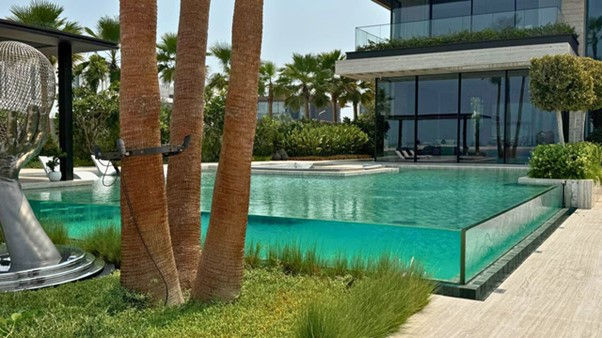
Rather than treating acrylic as a decorative material, the approach is to design it as a performance-driven structural component integrated into the building envelope.

Contact Information
For consultations, structural acrylic projects, or technical specification reviews, contact:
Main Office: New Exclusive Decoration Design & Fit-Out LLCOffice 516, Arenco Tower 3,Dubai Investment Park 1 (DIP1),Dubai, UAE
Factory: Warehouse 4, Street 44,Jebel Ali Industrial 1,Dubai, UAE
Landline: +971 4 228 2732
Mobile: +971 52 490 9933


Comments